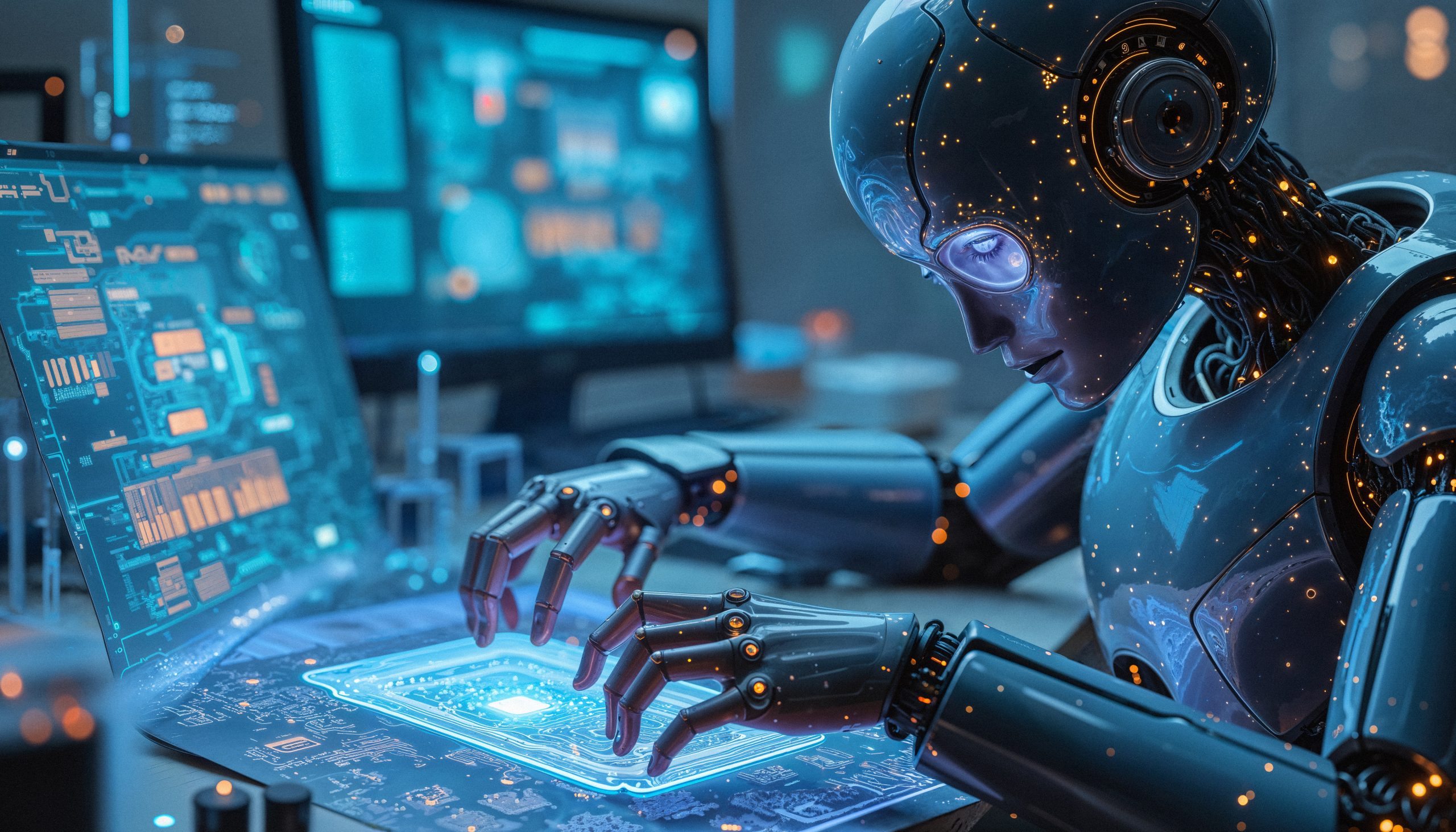
Currently, digital transformation is advancing at an accelerated pace and, in this context, Artificial intelligence in the job market. It has become established as one of the main drivers of structural change. Companies of different sizes and sectors are adopting AI-based solutions to optimize processes, reduce operational failures, and support strategic decisions. In this way, technology ceases to be merely an experimental resource and becomes integrated into daily corporate life in a practical and continuous manner.
Furthermore, it's important to highlight that artificial intelligence in the job market isn't limited to replacing human tasks, as is often imagined. On the contrary, it acts as a support tool, expanding capabilities, automating repetitive activities, and allowing professionals to focus on more analytical and creative tasks. This leads to the emergence of new roles, requiring constant updating and adaptation to new professional dynamics.
The evolution of artificial intelligence in the professional environment.
In general, artificial intelligence in the job market has evolved from simple automation systems to more sophisticated solutions capable of learning patterns, interpreting complex data, and offering real-time recommendations. Initially, these technologies were restricted to large corporations, but currently, they have become more accessible, including to small and medium-sized enterprises.
Furthermore, this evolution is accompanied by cultural and organizational changes. As companies increasingly rely on data and predictive analytics, artificial intelligence in the workplace contributes to more strategic and less intuitive management. Consequently, professionals who understand the use of these tools tend to stand out in an increasingly competitive environment.
Artificial intelligence tools applied to the job market.
ChatGPT
ChatGPT is an artificial intelligence solution focused on natural language processing, widely used to support written communication, research, and the organization of ideas. In the context of artificial intelligence in the job market, it functions as a virtual assistant capable of helping with administrative and creative tasks.
Furthermore, this tool is ideal for professionals in marketing, customer service, education, and content production. Through simple interactions, it's possible to review texts, structure reports, or clarify technical questions, significantly optimizing work time.
Finally, in day-to-day corporate life, ChatGPT can be used to support email writing, the creation of internal documents, and even initial team training. In this way, artificial intelligence in the job market acts as a complementary resource, without replacing human analysis.
Microsoft Copilot
Microsoft Copilot integrates artificial intelligence with tools already established in the corporate environment, such as word processors, spreadsheets, and presentation systems. This allows artificial intelligence in the workplace to become more integrated into existing routines without requiring major operational changes.
Furthermore, this solution is ideal for professionals who handle large volumes of data or lengthy documents. By suggesting improvements, summarizing information, and automating repetitive steps, Copilot contributes to increased productivity and a reduction in manual errors.
In daily use, Microsoft Copilot can support the creation of reports, financial analyses, and corporate presentations. In this way, artificial intelligence in the workplace acts as an extension of traditional tools, enhancing results gradually and safely.
Grammarly
Grammarly is an artificial intelligence tool focused on reviewing and improving texts, widely used by professionals who rely on written communication. Within the context of artificial intelligence in the job market, it helps standardize and clarify corporate language.
Furthermore, this solution is ideal for writers, managers, students, and international teams who use English as their primary language. By identifying grammatical errors and suggesting tone adjustments, Grammarly contributes to more professional and effective communication.
In everyday use, Grammarly can be integrated with emails, documents, and online platforms. Thus, artificial intelligence in the workplace helps reduce rework and improves the professional image of companies and employees.
Notion AI
Notion AI combines information organization with advanced artificial intelligence capabilities, being used for project management, note-taking, and strategic planning. In this sense, artificial intelligence in the job market is gaining a relevant role in knowledge organization.
Furthermore, the tool is ideal for collaborative teams, freelancers, and managers who need to centralize information in a single environment. Notion AI assists in creating summaries, structuring ideas, and automating administrative tasks.
In daily use, Notion AI can be employed to plan projects, document processes, and track goals. In this way, artificial intelligence in the workplace contributes to more organized and transparent management.
LinkedIn Recruiter with AI
LinkedIn Recruiter, powered by artificial intelligence, is geared towards talent recruitment and selection. Within the landscape of artificial intelligence in the job market, this solution supports companies in identifying profiles that match specific job openings.
Furthermore, the tool is ideal for human resources professionals and recruiters who handle large volumes of candidates. Through intelligent filters and compatibility analyses, the selection process becomes more efficient and targeted.
In day-to-day operations, LinkedIn Recruiter with AI can be used to identify talent, analyze market trends, and reduce hiring time. Thus, artificial intelligence in the job market contributes to more strategic and less subjective decisions.
Trends and benefits of artificial intelligence in the job market.
Currently, one of the main trends is the use of artificial intelligence in the job market to support decision-making. Instead of replacing professionals, these solutions provide data and analyses that help managers choose more effective paths. This increases operational efficiency without compromising human responsibility.
Furthermore, process customization is another significant benefit. Artificial intelligence in the workplace allows for the adaptation of training, workflows, and strategies according to the profile of each team or professional. In this way, skills development becomes more targeted and effective.
Finally, it is observed that the conscious adoption of these technologies contributes to more organized and productive work environments. However, it is essential that companies invest in training and ethics in the use of artificial intelligence in the labor market, ensuring a balance between technology and social responsibility.
Conclusion
In short, artificial intelligence in the workplace represents a natural evolution of the professional environment, bringing tools that increase productivity and improve information management. Over time, these solutions tend to become even more integrated into corporate routines, requiring continuous adaptation from professionals.
Therefore, understanding how to use artificial intelligence strategically in the job market is essential to keeping up with changes in the sector. By adopting these technologies responsibly and focusing on supporting human work, companies and professionals can benefit from a more efficient, balanced, and sustainable environment.